
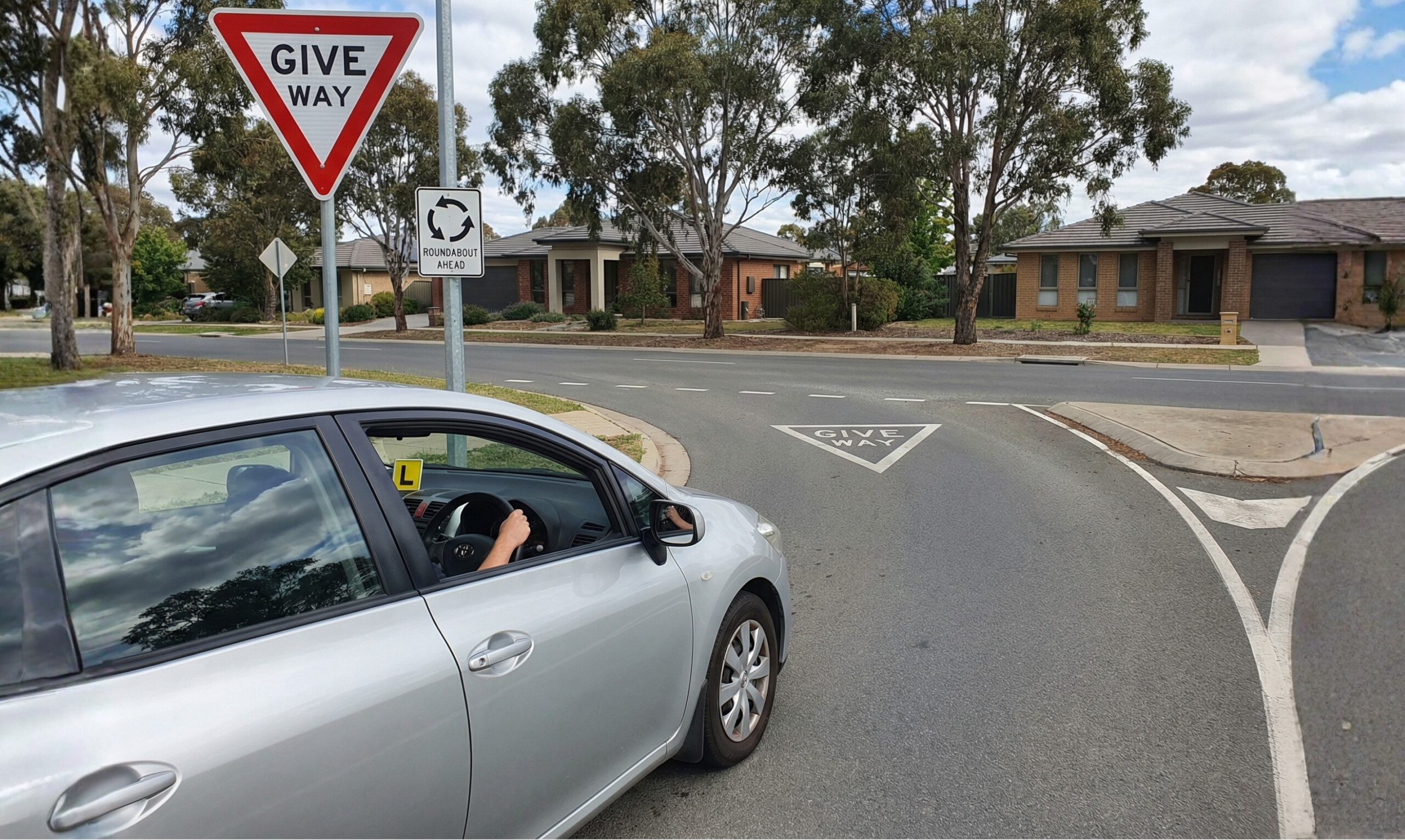
This guide covers the one-off practical driving Test for ACT learner licence holders and eligible interstate/overseas licence holders. It does NOT address the CBT&A logbook pathway in detail — that’s a separate process.
What Is the One-Off Driving Test?
The one-off driving test — officially called the One-Off Practical Driving Assessment — is a single, government-administered road test that allows eligible drivers in the ACT to progress from a Learner Licence to a Provisional Licence. It’s conducted by an ACT Government Licence Examiner at either the Gungahlin or Tuggeranong Access Canberra Service Centre, using your own vehicle. No government car is supplied.
This is not something a driving school can do for you. Only Access Canberra runs it.
The test lasts approximately 35–45 minutes and assesses 23 specific driving competencies — covering vehicle control, hazard response, road rule compliance, and general safe driving conduct. Pass, and you leave with a temporary Provisional Licence the same day.
The one-off test vs CBT&A at a glance:
| Option | Best For | Key Benefit | Limitation |
|---|---|---|---|
| One-Off Driving Test | Confident learners wanting a faster pathway | Single test, no ongoing instructor commitment | High failure rate — 27.7% pass first attempt in 2025 |
| CBT&A (Logbook Method) | Learners who prefer gradual, structured assessment | Assessed by familiar instructor over multiple lessons | More expensive overall; requires 7–15+ lessons |
| Interstate Licence Transfer | Interstate learner with 6–12 months tenure | Can use prior learner hours toward ACT test | One attempt only; fail = start from scratch |
| Overseas Licence Holder | Migrants from non-approved countries | Single assessment pathway available | From July 2025, a pass now earns a Provisional, not Full Licence |
Quick Comparison: The one-off test suits learners who are genuinely test-ready and want a single assessment date. The CBT&A works better when a learner benefits from ongoing structured feedback. The key difference is who assesses you — a government examiner versus your own instructor.
Who Can Actually Book It?
Here’s the thing: not every learner qualifies to sit the one-off test. Get this wrong, and Access Canberra won’t let you book.
To be eligible, you must:
- Hold a current, valid ACT Learner Driver Licence
- Be at least 17 years old on the day of the assessment
- Have completed at least 100 supervised driving hours (including 10 at night) — or 50 hours with 5 at night if you’re 25 or older
- Have held your ACT learner licence for a minimum of 12 months (6 months if aged 25+)
- Have passed the online Hazard Perception Test — available via the Safe Plates Testing website
[INTERNAL LINK: Hazard Perception Test guide → anchor text: “how to prepare for the ACT Hazard Perception Test”]
If you hold an interstate learner licence, you get one attempt only, provided you’ve held that licence for the required tenure and supply a licence history from your home jurisdiction within 7 calendar days of obtaining it.
Quick note: Overseas licence holders from non-approved countries must first complete the Road Ready Centre Pre-Learner Licence Course and the Driver Knowledge Test before they can book the one-off assessment at all. If you’re from an approved country and under 25, the same requirement now applies, effective May 2025 — the old Experienced Driver Recognition pathway has been removed.
To book: ACT learner licence holders call Access Canberra on 13 22 81 or visit a service centre in person. Interstate and overseas licence holders must book in person only.
The Pass Rate Nobody Warned You About
Most people assume this is a routine test. The data says otherwise.
According to data reported by the Canberra Times and AUDrive (January 2026), the ACT’s first-time pass rate has collapsed from 60.8% in 2021 to just 27.7% in 2025 — meaning fewer than 1 in 3 candidates now pass on their first attempt. That’s well below the national average of approximately 62%.
Taking the test a second or third time doesn’t reliably improve your odds either. Only around 50% passed on their third attempt in recent data, and taking it four or more times showed no consistent improvement.
The three most common reasons for failure, per Access Canberra’s own assessment records:
- Examiner intervention — the examiner has to take control of the vehicle for safety (averaged 17.9% of all errors from 2021–2025)
- Poor anticipation and judgement — failing to predict other road users’ behaviour (16.7% of errors)
- Right-of-way violations — especially at roundabouts, which Canberra has more of than almost any other Australian city
Or maybe I should say: the test isn’t getting harder on paper. The road environment is getting more complex, and most learners are underprepared for it.
What the Test Actually Involves (The 23 Competencies)
The ACT Government Licence Examiner assesses you on 23 specific competencies across three broad categories: vehicle control, traffic management, and general driving conduct.
You won’t be told the exact route in advance. The examiner will direct you through public roads near the test centre — expect intersections, roundabouts, school zones, construction zones, and merged traffic situations.
What examiners are specifically watching for:
- Visible head checks — your head needs to physically turn, not just your eyes
- Speed limit awareness, including zone changes in school and pedestrian areas
- Full stops at stop signs — a pause of 2–3 full seconds, not a rolling slow
- Left-exit signalling at roundabouts, even when going straight through
- Not overrunning stop or give-way lines
Look — if you’re planning to self-prepare by just logging more hours with a parent, here’s what actually works better: a structured pre-test lesson with an ACT-accredited driving instructor who knows the Gungahlin or Tuggeranong test routes specifically. They’ll run you through the common failure points in context, on the actual roads the examiner will use.
Steer Smart Driving School, for example, offers an instructor meet-and-accompany service — they can meet you at the Access Canberra service centre one hour before your test, run a practice drive, and help you tighten any weak spots before you face the examiner.
Your Vehicle on Test Day
The government does not supply a car. You must bring your own.
It’s a harder requirement than most realise. The vehicle must be:
- Fully registered and roadworthy (it will be inspected before the test begins)
- Clean and free of loose items in the cabin
- Fitted with L plates on the front and rear — not placed inside or on the windows
- The car you’re most comfortable in, ideally the one you’ve been practising with
Don’t underestimate that last point. Driving in an unfamiliar vehicle adds cognitive load on test day — exactly when you need your full attention on the road.
If you don’t have access to a suitable car, driving schools can hire you one. Book well in advance, as schools in Canberra get fully booked in the weeks leading up to peak test periods.
FAQs
Q: What’s the difference between the one-off driving test and the logbook method in the ACT?
The one-off test is a single government-run assessment. The logbook (CBT&A) involves progressive assessment by your instructor across multiple lessons. Both result in a Provisional Licence.
How do I book the one-off driving test in Canberra?
ACT learner licence holders call Access Canberra on 13 22 81 or visit a service centre. Interstate and overseas licence holders must book in person at Gungahlin or Tuggeranong.
Should I do a pre-test driving lesson before my one-off assessment?
Yes — especially given ACT’s 27.7% first-attempt pass rate. A one-hour lesson with an instructor on the actual test route can identify gaps you wouldn’t catch in regular practice.
Why do so many people fail the ACT practical driving test?
The most common failures are examiner intervention (unsafe driving), poor hazard anticipation, and right-of-way errors — particularly at roundabouts, which are unusually frequent on Canberra test routes.
What happens if I fail the one-off driving test?
You can rebook and pay the test fee again. If you hold an overseas licence and fail, you must apply for an ACT Learner Licence and complete the full Graduated Licensing Scheme requirements from the beginning.
Leave a Reply