
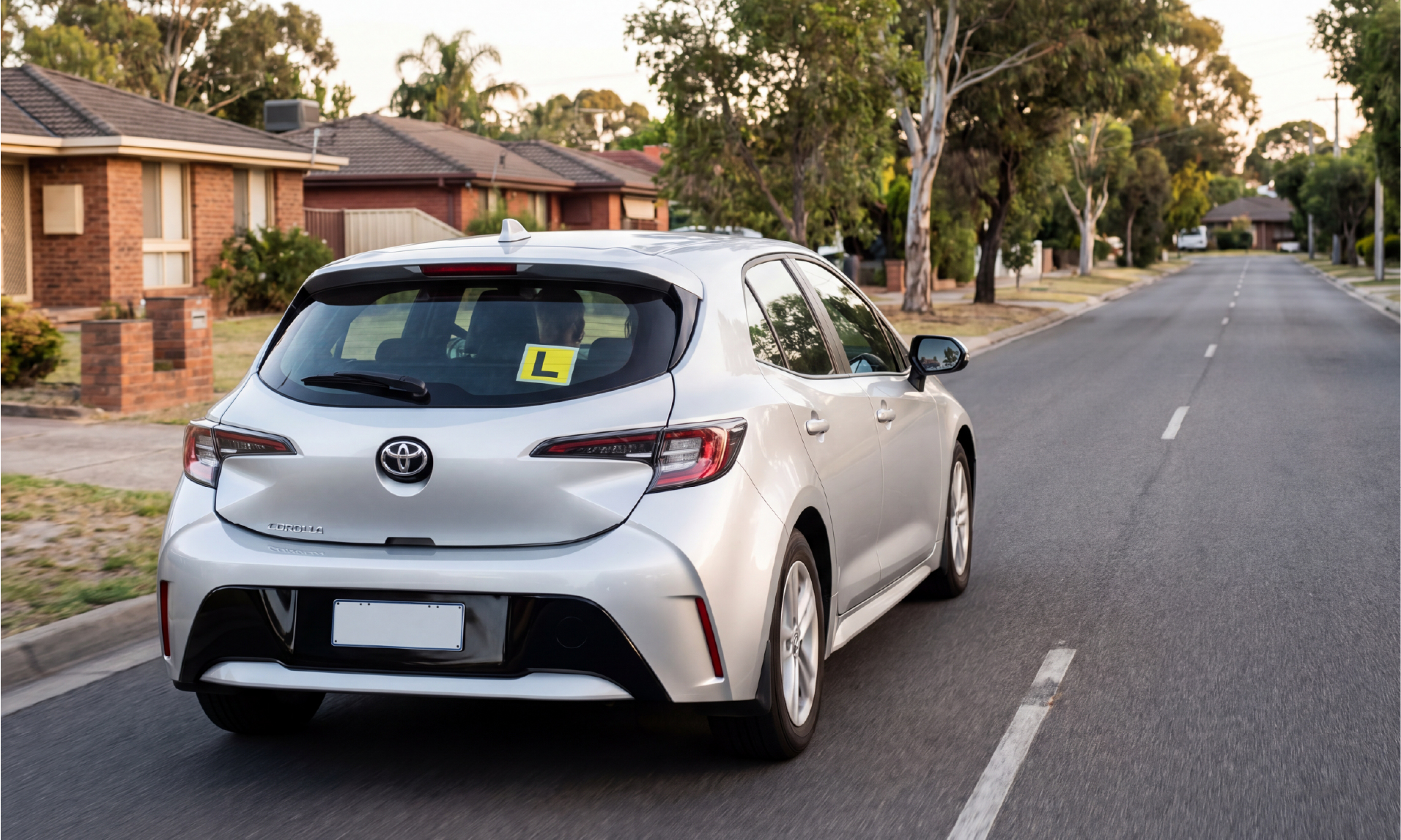
Getting your ACT Learner Licence is the first official step in the ACT Graduated Licensing Scheme. It is the document that legally allows you to begin supervised driving on ACT roads, and the foundation on which everything else is built, from your logbook hours through to your Provisional Licence and eventually your full unrestricted licence.
This guide covers every stage of the process in full. It explains not just what to do, but why each step exists, what the rules mean in practice, and what to expect at every point along the way. Whether you are a first-time learner, a parent helping a teenager prepare, an adult starting to drive later in life, or someone who has moved to Canberra from interstate or overseas, everything you need is in this guide.
At Steer Smart Driving School in Canberra, our instructors work with learner drivers at every stage of this journey. This guide reflects what we explain to every new learner on their first day.
Who Can Apply for an ACT Learner Licence?
Three eligibility requirements must be satisfied before the application process can begin. All three are checked by Access Canberra when you attend the Service Centre.
Age Requirement
You must be at least 15 years and 9 months old. There are no exceptions, no early applications, and no way to receive your licence before this age. Access Canberra will not process a Learner Licence application for anyone who does not meet this threshold on the day they visit the Service Centre.
Worth knowing: You can complete the Pre-Learner Licence Course and sit the Knowledge Test before you turn 15 years and 9 months. Both certificates remain valid for two years. This means you can do the preparation early so that on the day you reach the minimum age, you are ready to walk into Access Canberra and collect your licence immediately.
ACT Residency
You must be a resident of the Australian Capital Territory. Access Canberra requires documentary proof of ACT residency at the time of application. A utility bill, bank statement, government correspondence, or similar document showing your Canberra address is accepted.
If you are under 18 and have no mail addressed to you personally — which is common for teenagers living with parents — a parent or legal guardian can complete a statutory declaration confirming that you live with them at an ACT address. This is a simple, free document available from any Access Canberra Service Centre or Justice of the Peace.
First-Time ACT Applicant
This process applies to first-time applicants with no existing ACT driver’s licence. If you hold an interstate learner licence or an overseas licence, separate rules apply. These are covered in full in Section 14 of this guide.
The Four-Step Process at a Glance
Getting your ACT Learner Licence follows four steps in a fixed sequence. Each step must be completed before the next can begin.
- Complete the Pre-Learner Licence Course (PLLC)
- Pass the ACT Road Rules Knowledge Test (DKT)
- Visit an Access Canberra Service Centre with your certificates and documents
- Receive your logbook and L plates at the Service Centre — your licence card arrives by post
The sections below walk through each step in full detail.
Step 1 — Complete the Pre-Learner Licence Course (PLLC)
The Pre-Learner Licence Course is a mandatory government-approved training program. Every person applying for an ACT Learner Licence for the first time must complete it. There are no exemptions, regardless of prior driving experience, age, or background.
What the Course Covers
The PLLC is designed to build a foundation of road knowledge and driver awareness before you begin supervised driving. The course covers:
- ACT road rules — intersections, give way situations, speed limits, and lane use
- Hazard awareness — recognising and responding to risks in the driving environment
- Decision-making under pressure — how drivers make judgement calls and where errors occur
- Driver responsibility — your legal and moral obligations to other road users
- Crash statistics — real ACT data on where, when, and why collisions happen
- The ACT Graduated Licensing Scheme — how the full licensing system works from L plates to a full licence
The course runs for approximately 10 hours in total. Depending on the provider, it is completed in one full day or across two shorter sessions.
In-Person or Online — Both Are Fully Approved
The Pre-Learner Licence Course can be completed in a classroom or entirely online via Zoom. Both delivery formats are approved by the ACT Government under the Road Transport (Driver Licensing) Regulation. The Course Completion Certificate you receive is identical regardless of which format you choose.
In-person courses are run at provider locations across Canberra. Online courses are delivered via Zoom and allow you to complete the full 10-hour program from home. If your schedule involves school, shift work, or caring responsibilities, the online option removes the need to travel and gives you access to the same accredited content.
Course Cost
Course fees typically range from $169 to $185, with two free Knowledge Test attempts included. Some providers offer combined packages at slightly different price points. Fees are paid directly to the accredited provider when you book, not to Access Canberra.
Free through school: The Pre-Learner Licence Course is delivered through most ACT secondary schools as part of the Year 10 curriculum at no cost to students. If you are currently in Year 10, check with your school before booking elsewhere — you may be able to complete this mandatory step for free.
What You Receive
Completing the course earns you a Course Completion Certificate. This certificate, along with your Knowledge Test Pass Certificate, must be presented at Access Canberra when you apply for your licence. Both certificates are valid for two years. If you do not collect your Learner Licence within that window, you will need to retake and pass both the course and the test before a licence can be issued.
Ready to book driving lessons the moment you have your L plates? Steer Smart offers flexible driving lessons across Canberra, 7 days a week. See lesson packages → steersmartdriving.com.au/packages
Step 2 — Pass the ACT Road Rules Knowledge Test
The Road Rules Knowledge Test — also called the Driver Knowledge Test (DKT) is a computerised assessment. It tests whether you understand ACT road rules, road safety principles, and safe driving practices at the standard required to begin supervised driving on public roads.
What the Test Covers
Questions are drawn from a bank of 378 training questions. Topics tested include:
- Alcohol, drugs, and fatigue — their effects on driving performance and the law
- Intersections — right of way, give way rules, and merging
- Speed limits — including school zones, variable limits, and default urban and rural speeds
- Seat belts and child restraints — who is responsible and when they must be worn
- Vulnerable road users — the specific rules that protect pedestrians, cyclists, and motorcyclists
- Car-specific knowledge — basic vehicle controls, warning lights, and roadworthy requirements
How the Test Works
35 questions are drawn from the question bank on the test day. They come from two categories: Car General and Driving General. You are permitted a maximum of two incorrect answers per category — four incorrect answers in total across the full test.
Answering five or more questions incorrectly results in a fail. There is no waiting period between attempts and no cap on how many times you can sit the test. A fee applies to each attempt beyond the free tries included in most course packages.
Where to Take the Test
In most cases, the Knowledge Test is administered by the same provider who delivered your PLLC. Many learners sit the test on the same day the course finishes. Most packages include two free test attempts — confirm this with your provider when you book.
How to Prepare
The ACT Road Rules Handbook is the primary study resource. It is available as a free PDF from the Access Canberra website and covers every topic that appears in the test. Reading it in full before sitting the test is the most effective preparation you can do.
The ACT Government also provides a free online practice test at safeplatestesting.act.gov.au. Working through the practice questions helps you understand the format, identify your weaker areas, and build confidence before the real assessment. The PLLC covers many of the same concepts, but the handbook and practice test are separate study tools that make a measurable difference to results.
Step 3: Visit an Access Canberra Service Centre
With both certificates in hand, the next step is visiting an Access Canberra Service Centre in person. This is where your application is formally processed, your identity is verified, and your Learner Licence is officially issued.
What to Bring
Arrive with the following documents. Missing any one of them will delay your application.
- Pre-Learner Licence Course Completion Certificate — issued by your PLLC provider on completion
- Road Rules Knowledge Test Pass Certificate — issued after passing the DKT
- Proof of identity — passport, birth certificate, or ImmiCard. Access Canberra uses a points-based identity system. Refer to the ACT Road Rules Handbook, Page 6, for the full list of accepted documents and required point values.
- Proof of ACT residency — a utility bill, bank statement, or official government letter addressed to you at your Canberra address
- Completed ACT Application for a Driver Licence Form — provided when you book your PLLC, or available at any Access Canberra Service Centre
The Visual Acuity Test
A visual acuity (eye) test is conducted at the Service Centre as part of your application. You do not need to visit an optometrist beforehand — the test is administered by Service Centre staff using standard equipment. It checks that your eyesight meets the minimum standard required to drive safely.
If you wear prescription glasses or contact lenses, bring them to the appointment. If the test confirms you need corrective lenses to meet the minimum standard, a condition will be recorded on your licence requiring you to wear them while driving.
Under 18 and Cannot Prove Residency?
Teenagers who do not receive mail in their own name — which covers most people under 18 — can have a parent or legal guardian complete a statutory declaration confirming that the applicant lives with them at an ACT address. This is accepted by Access Canberra in place of direct residency documentation. Statutory declaration forms are available free of charge at Service Centres or from any Justice of the Peace in the ACT.
Step 4: Your Licence Card, Logbook and L Plates
After your application is processed, Access Canberra posts your licence card to your registered address. The physical card does not leave the Service Centre with you on the day; all cards issued by Access Canberra are mailed out. Delivery typically takes one to two weeks.
What you receive at the Service Centre on the day of your visit is your official ACT Learner Driver Logbook and a set of L plates. These come in a Road Ready pack that also includes reference handbooks covering road rules, logbook requirements, and the licensing system.
Start driving immediately: You do not need to wait for your licence card to arrive before you begin supervised driving. Your logbook and L plates are enough to legally begin practising with a qualified supervisor. Keep your application receipt as proof of your licence status while you wait for the card.
How Long Is an ACT Learner Licence Valid?
An ACT Learner Licence issued after 1 January 2020 is valid for five years. This gives you ample time to complete your required logbook hours and progress to your Provisional Licence without pressure.
If your licence expires before you reach the Provisional Licence stage, you must visit an Access Canberra Service Centre to renew it. Renewal requires passing a new ACT Road Rules Knowledge Test. You do not need to redo the full Pre-Learner Licence Course, unless your original PLLC certificate has also lapsed (certificates expire after two years).
Licence renewals cannot be completed online. An in-person visit to a Service Centre is required.
Your Pathway — Under 25 vs 25 and Over
Your age at the time your Learner Licence is issued determines which set of requirements you must meet before applying for your Provisional Licence. The ACT Graduated Licensing Scheme has two distinct pathways, and the differences are significant.
ACT Learner Licence Requirements by Age
| Requirement | Under 25 at time of issue | 25 or older at time of issue |
| Minimum supervised driving hours | 100 hours | 50 hours |
| Night driving hours required | 10 hours | 5 hours |
| Under 25 at the time of issue | 12 months | 6 months |
| Provisional stage after passing driving test | P1 (red) then P2 (green) | Straight to P2 (green) |
| Late-night peer passenger restrictions | Yes — applies during P1 stage | No — go directly to P2 |
What This Means in Practice
A 17-year-old who receives their Learner Licence on day one must hold it for a minimum of 12 months and log 100 supervised driving hours — including 10 hours at night — before they can book a Provisional Licence driving test. Even if they complete the hours faster, they must still wait for the 12-month period to pass.
A 27-year-old who receives their Learner Licence on the same day needs only 50 hours (5 at night) and must hold the licence for a minimum of 6 months. When they pass their driving test, they skip the P1 red plate stage entirely and are issued a P2 green plate licence directly.
Knowing which pathway applies to you from the start lets you plan your driving practice schedule realistically and set an accurate timeline for your independence behind the wheel.
L-Plate Rules — Every Condition Explained
Holding an ACT Learner Licence comes with a specific set of legal conditions that apply every time you drive. These conditions are not guidelines — they are enforceable law. Breaching them can result in fines, demerit points, and in serious cases, licence suspension.
L Plates Must Be Displayed at All Times
L plates must be attached to both the front and rear of the vehicle whenever you are driving. This applies regardless of which vehicle you are in — your own, a family member’s, or your driving instructor’s car. The plates must be clearly visible to other road users and positioned correctly. Driving without displayed L plates is a demerit point offence.
A Qualified Supervisor Must Be Present
A supervising driver must be seated in the front passenger seat at all times while you are driving. That person must hold a valid full Australian driver’s licence. A provisional licence holder cannot legally supervise a learner driver in the ACT.
There are no passenger restrictions for ACT learner drivers. You may carry as many passengers as the vehicle legally accommodates, in addition to your supervisor.
Zero Blood Alcohol — You and Your Supervisor
As a learner driver, you must maintain a zero blood alcohol concentration (BAC) at all times. No alcohol at all — not trace amounts, not a single drink consumed hours earlier.
Applies to your supervisor too: The zero BAC requirement extends to your supervising driver. They must also have zero blood alcohol every time they sit in the passenger seat while you drive. If your supervisor has consumed any alcohol — even a small amount — it is not legal for them to supervise you, regardless of how they feel. This applies to parents, friends, and any other person acting as your supervisor.
No Mobile Device Use
Using a mobile phone, tablet, or any electronic device while driving is prohibited — including hands-free use. This means no calls, no music apps, no GPS interaction, no Bluetooth phone use that requires you to touch or interact with the device. The prohibition also applies when the vehicle is stopped but not parked. A single mobile phone offence as a learner driver can consume a significant portion of your four-demerit-point limit.
Towing Restriction
Learner drivers in the ACT cannot tow a trailer with a Gross Vehicle Mass (GVM) exceeding 750 kilograms. This covers most standard box trailers and boat trailers. If you need to tow anything above this threshold, you must wait until you hold at least a Provisional Licence.
Demerit Point Limit
ACT learner drivers are subject to a four-demerit-point limit across any three years. This is substantially lower than the limit applied to full licence holders. Common offences that carry demerit points include speeding, running red lights, failing to display L plates, and mobile phone use. Reaching or exceeding four points can result in licence suspension or disqualification.
Every demerit point counts at this stage. Treat the limit as a serious ceiling, not an allowance.
The Learner Logbook — How Your Hours Are Counted
The learner driver logbook is the official record of every supervised driving session you complete. It must be filled in honestly and signed by your supervisor after each session. Access Canberra may inspect your logbook when you apply for your Provisional Licence, so accurate records are essential.
Every entry must include the date, the start and finish time, the location, the driving conditions (day, night, wet, highway, etc.), and the supervisor’s signature. Night driving hours must be recorded separately from daytime hours, as they form a distinct requirement within your total.
Who Can Be Your Supervisor?
Any person who holds a valid full Australian driver’s licence can legally supervise your driving. There is no requirement for supervisors to hold a professional qualification or to be a driving instructor. Parents, family members, partners, and friends all qualify, provided they hold a full licence — not a provisional or international licence — and maintain zero blood alcohol every time they supervise.
The 3-for-1 Instructor Hour Rule
How instructor hours work: Your first 10 lessons with an ACT-accredited driving instructor each count as three hours in your logbook — not one. This means completing 10 professional driving lessons adds 30 hours to your logbook record. For an under-25 learner who needs 100 hours total, that is 30% of the full requirement covered through structured, professionally guided lessons.
The 3-for-1 multiplier applies only to the first 10 instructor lessons. After that, each lesson counts as one logbook hour. The multiplier exists because professional lessons involve higher-quality, structured practice across a broader range of conditions than most supervised home practice achieves.
Beyond the logbook credit, lessons with a qualified instructor correct technique errors early — before they become ingrained habits that are harder to address later in the licensing process.
Your first 10 lessons with Steer Smart each count as 3 logbook hours. That’s 30 hours recorded from 10 sessions. Qualified ACT-accredited instructors. Flexible scheduling across Canberra. Book a lesson → steersmartdriving.com.au/packages
Optional Courses That Earn Logbook Hours
Two ACT Government-approved safety courses allow learner drivers to earn credited logbook hours without additional on-road practice. Both courses are optional — they are not required to obtain a Provisional Licence — but they provide significant value both as hour credits and as genuine driver education.
ACT Safer Driver Course — 20 Credited Logbook Hours
The Safer Driver Course awards 20 credited logbook hours on completion. It is available to learner drivers who were under 25 when their Learner Licence was issued. To be eligible, you must have held your licence for at least three months and have a minimum of 30 hours already recorded in your logbook.
The course consists of a 2.5-hour theory workshop followed by a 30-minute practical driving session with an accredited instructor. It focuses on low-risk driving strategies, hazard identification and observation, the psychological effects of peer pressure on driver behaviour, and the transition from supervised to independent driving — the period when new drivers face the highest crash risk.
To claim the hours, take your course completion certificate and logbook to an Access Canberra Service Centre. Staff will credit 20 hours directly into your logbook.
ACT Vulnerable Road User Program — 10 Credited Logbook Hours
The Vulnerable Road User Program awards 10 credited logbook hours and is available to learner drivers of all ages. It consists of a self-directed learning component — completed in your own time before attending — followed by a two-hour online workshop.
The program focuses specifically on safely sharing the road with cyclists, motorcyclists, and pedestrians. It builds awareness of how these road users move, why they are more vulnerable in crash situations, and what driving behaviours put them at greatest risk. As active transport continues to grow in Canberra, this knowledge is practical and immediately applicable.
The course costs approximately $60 and is available online, typically running on Sunday mornings. Completion earns 10 credited logbook hours added directly to your record at Access Canberra.
Combo Package — 30 Credited Logbook Hours
Several providers offer the Safer Driver Course and Vulnerable Road User Program as a combined package for approximately $209. Completing both courses together earns 30 credited logbook hours — a significant reduction in the on-road practice hours you need to source through supervised driving alone.
The Combo Package is one of the most efficient ways to reduce your time to the Provisional Licence while simultaneously building the driving knowledge and awareness that makes you genuinely safer when you eventually drive independently.
The Hazard Perception Test
The Hazard Perception Test (HPT) is a mandatory online assessment that must be passed before you can book your Provisional Licence driving test. You become eligible to sit it once you have held your Learner Licence for at least three months.
The test is video-based. You watch short clips of real driving footage and identify developing hazards by clicking or tapping when you see them. Your score is calculated based on whether you spotted each hazard and how quickly you responded. Early, accurate identification scores higher than a delayed response.
The first attempt is free. If you do not pass, a 24-hour waiting period applies before you can sit it again, and a fee applies to each subsequent attempt. The test is completed online at safeplatestesting.act.gov.au and can be done from any device with an internet connection — at home, at the library, or anywhere convenient.
Practising hazard perception during your supervised driving sessions — by calling out hazards as you see them developing — is the most effective preparation for this test. The skill is transferable directly from real driving to the assessment format.
Your Full Roadmap to the Provisional Licence
Getting your Learner Licence opens the road ahead — but it is only the beginning of the ACT Graduated Licensing Scheme. Here is every step you need to complete, in order, to reach your Provisional Licence.
Stage 1: Build Your Logbook Hours
Begin logging supervised driving sessions in your logbook from your first drive. Track every session — date, start time, finish time, location, and conditions. Night hours must be recorded separately. Your first 10 lessons with an accredited instructor count as 30 logbook hours.
Stage 2: Complete the Hazard Perception Test (After 3 Months)
Once you have held your Learner Licence for three months, you are eligible to sit the Hazard Perception Test online. Your first attempt is free. This test must be passed before your driving test can be booked — do not leave it until the last moment.
Stage 3: Consider the Optional Safety Courses
The Safer Driver Course (20 credited hours, for under-25s) and the Vulnerable Road User Program (10 credited hours, any age) can be completed after you have held your licence for at least three months and have 30 logbook hours recorded. Together they offer 30 credited hours and meaningful driver education.
Stage 4: Meet the Requirements and Book Your Driving Test
Once you have met the minimum holding period, logged the required hours, and passed the Hazard Perception Test, you are eligible to book your Provisional Licence driving test through Access Canberra.
Two Pathways to Your Provisional Licence Driving Test
Logbook Method (CBT&A): Your accredited driving instructor assesses you against 23 driving competencies over your course of lessons, with a final assessment at the end. A minimum of 7 lessons is required for this method, though most learners need between 10 and 15 to reach the required standard across all competencies.
Government One-Off Driving Test: A practical test conducted by an ACT Government Licence Examiner at an Access Canberra test centre in Gungahlin or Tuggeranong. The test runs for up to 45 minutes and covers a range of driving situations on public roads.
Stage 5: Pass and Receive Your Provisional Licence
Passing your driving test — by either pathway — results in the issue of your Provisional Licence. Under-25 applicants enter the P1 stage (red plates) for 12 months before progressing to P2 (green plates). Applicants aged 25 or older at the time of licence issue go directly to the P2 stage.
Interstate and Overseas Licence Holders
Interstate Learner Licence Holders
An interstate learner licence cannot be transferred directly to the ACT. However, holding an active interstate learner licence — one that has not expired, been suspended, or been disqualified — entitles you to one practical driving assessment with an ACT Government Licence Examiner.
To use this pathway, obtain a certified licence history from your home jurisdiction. From the date you receive that document, you have seven calendar days to present it to an Access Canberra Service Centre and book your practical driving assessment.
If you pass the assessment, you are issued an ACT Provisional Licence. If you do not pass, you must complete the Pre-Learner Licence Course and Road Rules Knowledge Test in full and apply for an ACT Learner Licence before progressing further.
Overseas Licence Holders
The process for overseas licence holders depends on the country that issued the licence. Australia has reciprocal licence recognition agreements with several countries. Holders of licences from those approved countries follow a different, typically shorter conversion process.
If your licence was issued by a country not on the approved list, you must complete the full Pre-Learner Licence Course and pass the Road Rules Knowledge Test. After doing so, you may book a one-off practical driving test with an ACT Government Licence Examiner.
If you are unsure whether your country of origin is on the approved list, contact Access Canberra directly or ask your driving school before assuming a specific pathway applies to you. The list is subject to change and varies from the lists used by other Australian states.
Defence Personnel and ADFA Cadets
Defence personnel stationed in the ACT, including ADFA cadets, are eligible for the ACT logbook system as interstate learners. Specific documentation requirements apply. Contact Access Canberra for the current requirements for Defence identification and interstate licence history before attempting to book any assessment.
Frequently Asked Questions
How old do you need to be to get a Learner Licence in the ACT?
You must be at least 15 years and 9 months old. You can complete the Pre-Learner Licence Course and sit the Knowledge Test before reaching this age, but Access Canberra will not issue the licence until the minimum age requirement is met on the day you visit.
Is it called a learner’s permit or a learner’s licence in the ACT?
The correct ACT term is Learner Licence. The term “learner’s permit” is used in some other states, but does not apply in the ACT. For official applications, correspondence with Access Canberra, and any legal purpose, always use the term Learner Licence.
How long does the Pre-Learner Licence Course take?
Approximately 10 hours, completed in one full day or across two shorter sessions, depending on the provider. Both in-person and online delivery are available and fully government-approved.
Can I complete the Pre-Learner Licence Course online?
Yes. Multiple ACT-accredited providers deliver the course via Zoom. The Course Completion Certificate issued is identical to the in-person version. Both formats are approved under the ACT Road Transport (Driver Licensing) Regulation.
How many questions are on the ACT Road Rules Knowledge Test?
35 questions are drawn on test day from a bank of 378. Questions come from two categories: Car General and Driving General. You may answer a maximum of four questions incorrectly — no more than two per category — to pass.
What happens if I fail the Knowledge Test?
There is no waiting period between attempts and no cap on the number of times you can sit the test. A fee applies to each attempt beyond the free tries included in most course packages. Most providers include two free attempts in the course fee.
Does my licence card get given to me at the Access Canberra Service Centre?
No. Access Canberra posts all licence cards to your registered address. You receive your logbook and L plates at the Service Centre on the day of your application, but the physical licence card arrives by post within one to two weeks. You can begin supervised driving before the card arrives.
Do I need to bring an eye test result to Access Canberra?
No. The visual acuity test is conducted at the Service Centre by staff as part of your application. No prior optometrist appointment is required. Bring corrective lenses if you normally wear them.
Who can supervise my driving on L plates?
Any person who holds a valid full Australian driver’s licence can supervise you. They don’t need to be professional instructor but they must hold a full licence, not provisional or international, and must maintain zero blood alcohol concentration every time you’re being supervised by them. It is a must for your driving instructor to sit in the front passenger seat.
Do professional driving lessons count as more hours in the logbook?
Yes. Your first 10 lessons with an ACT-accredited driving instructor each count as three logbook hours. Completing 10 professional lessons records 30 logbook hours in total. The 3-for-1 multiplier applies only to the first 10 instructor lessons.
How long must I hold my Learner Licence before I can apply for my Provisional Licence?
If you were under 25 when your Learner Licence was issued: minimum 12 months, with 100 supervised hours including 10 at night. If you were 25 or older at the time of issue: minimum 6 months, with 50 supervised hours including 5 at night. Both requirements must be met regardless of which is completed first.
Can I fail my Provisional Licence driving test and keep my Learner Licence?
Yes. Failing the Provisional Licence driving test does not affect your Learner Licence status. A 48-hour waiting period applies before you can rebook the test.
What happens if my Learner Licence expires before I get my Provisional Licence?
Visit an Access Canberra Service Centre and pass a new Road Rules Knowledge Test to renew your licence. You do not need to redo the Pre-Learner Licence Course unless your original PLLC certificate has also expired. Renewals require an in-person visit — they cannot be completed online.
Can I carry passengers while on my Learner Licence in the ACT?
Yes. There are no passenger restrictions for ACT learner drivers. You may carry as many passengers as the vehicle legally accommodates. The supervising driver must still sit in the front passenger seat at all times.
What is the ACT Safer Driver Course and who is it for?
The Safer Driver Course is a government-approved training program for under-25 learner drivers. It is available after you have held your Learner Licence for at least three months and have 30 logbook hours recorded. Completing it earns 20 credited logbook hours and covers low-risk driving strategies, hazard observation, and peer influence in driving situations.
Leave a Reply